If you’ve been fishing commercially for twenty or thirty years, you’ve probably heard plenty of general advice about selling a business: clean up the books, reduce owner dependence, grow your revenue. That advice isn’t wrong, but it barely scratches the surface when it comes to selling a commercial fishing enterprise in Atlantic Canada.
Marine and fishing businesses have value drivers that exist nowhere else in the business world. Your quota and licenses may be worth more than your vessel, your gear, and twenty years of earnings combined. A DFO compliance issue from six years ago can kill a deal that’s months in the making. A buyer who doesn’t qualify under the owner-operator policy is simply not a buyer, regardless of how much money they have. These are not factors a general business broker will think to ask about.
Atlantic Canada is one of the most productive and economically significant commercial fishing regions on the planet. The fisheries here — SW Nova Scotia lobster, Gulf snow crab, Newfoundland crab and shrimp, Bay of Fundy scallop and herring — have supported families and communities for generations. And over the past twenty years, the underlying asset values in this sector have appreciated dramatically. Lobster licenses in LFA 34 can be worth $2–4 million individually. Snow crab quota has appreciated in a way that few other agricultural or fishing assets have anywhere in the world.
What follows are the seven factors that have the greatest influence on the value of a commercial fishing enterprise at the time of sale — and what you can do, or at least understand, about each one.
Factor 1: Quota and License Holdings
For most well-licenced Atlantic Canadian fishing enterprises, the quota and licenses are the primary asset. Not the vessel. Not the gear. Not the long-standing relationships with processors. The quota.
DFO (Fisheries and Oceans Canada) issues commercial fishing licenses and quota allocations by species and area. These are not granted freely — they are constrained in number and, in many fisheries, have become Individual Transferable Quotas (ITQs) that can be bought and sold on the open market, subject to DFO rules. In non-ITQ fisheries like many lobster license areas, licenses are transferable but the process is controlled and the market is effectively set by comparable sales.
The value of quota and licenses is driven by:
- Species and area — a lobster license in LFA 34 (SW Nova Scotia) is worth far more than a license in a lower-volume area; snow crab quota in 4R/4S carries different value than in other zones
- Total Allowable Catch (TAC) trends — rising TACs over the past decade have supported rising quota values; any suggestion of TAC reductions affects value
- Transferability under DFO policy — some licenses are straightforward to transfer; others have conditions or restrictions that complicate sale
- Owner-operator requirements — in many license classes, DFO requires the license holder to be an active, bona fide commercial fisher; this limits who can hold the license and therefore who can buy the enterprise
- Stacking and aggregation — whether multiple quotas are held under one enterprise, and whether that aggregation is permissible under DFO policy
In a well-licenced lobster operation, the license can represent 60–80% of total enterprise value. Buyers are often, in practice, buying the license first and the vessel second.
For sellers, this means the single most important thing you can do before any sale process is have your DFO licensing documentation in order: current license certificates, quota allocation notices, any conditions of license, and a clear record of annual catch versus quota. Gaps or ambiguities in this documentation slow deals and reduce buyer confidence.
Factor 2: Vessel Condition and Survey Results
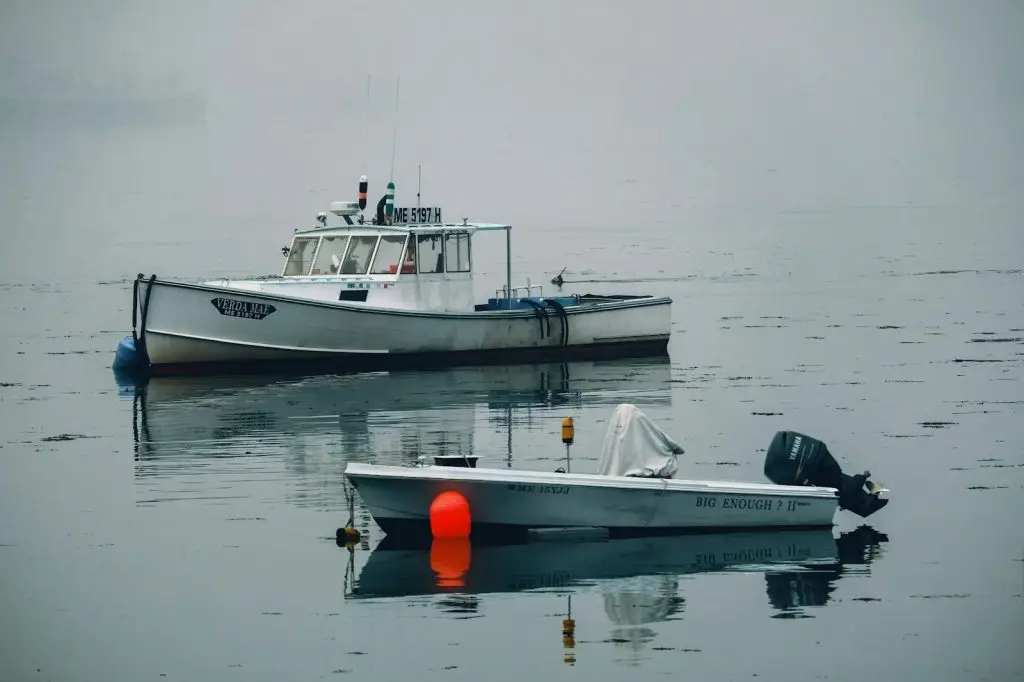
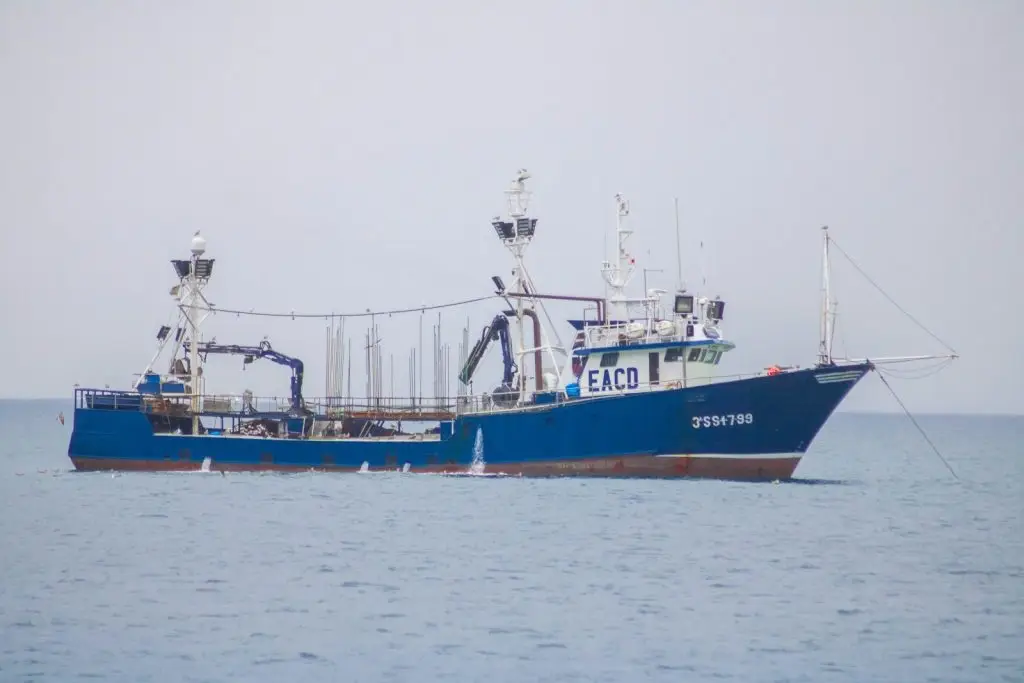
A buyer acquiring a fishing enterprise will commission an independent Transport Canada marine survey as part of their due diligence. This is non-negotiable. The survey will examine the hull, the engine and mechanical systems, the safety equipment, the electronics and navigation systems, and compliance with Transport Canada vessel safety regulations. What that survey finds will directly affect the agreed price — or kill the deal.
Vessel condition matters because deferred maintenance in a commercial fishing vessel is expensive to catch up on and can represent real safety risk. A 25-year-old fibreglass hull that has been meticulously maintained is a very different asset from a 25-year-old hull that has been run hard with the minimum required upkeep. Age alone is less important than condition and documentation of maintenance history.
What buyers look at in a vessel:
- Hull construction and condition — fibreglass, steel, or aluminum; any signs of osmotic blistering, corrosion, or structural compromise
- Engine hours and service records — a well-documented engine service history is a significant selling point
- Safety equipment compliance — current Transport Canada certification; life rafts, EPIRBs, flares all within service dates
- Electronics and navigation systems — chart plotter, radar, VHF, AIS, sounder; buyers will assess whether systems are current or need replacement
- Gear condition — traps, lines, nets, trawl gear depending on species; condition affects first-season operating cost
- Most recent haul-out and hull inspection date
The practical advice here is straightforward: address the deferred maintenance before you sell, or price it in. A buyer who finds $80,000 in deferred maintenance in a survey will want a dollar-for-dollar reduction. If you address it beforehand, you capture the value. If you leave it, you lose it — and you lose some buyer confidence along the way.
Factor 3: Crew Retention and Key Skipper Risk
In most businesses, the key-person risk question is about the owner: what happens when you leave? In a commercial fishing enterprise, there is often a second key-person question that is just as important — what happens to the skipper?
An experienced skipper who knows the grounds intimately, who has fished the same quota for fifteen or twenty years, and who has built relationships with the crew and the processor, is not easily replaced. Their knowledge of where and when to fish, how to handle equipment in difficult conditions, and how to get the best out of a crew is worth real money to a buyer. If that skipper leaves with the previous owner, the buyer is acquiring a vessel, quota, and a significant operational gap.
Buyers will want to understand:
- Whether the current skipper is retained after the sale, and under what terms
- Whether the crew follows the vessel or the skipper — if the crew is loyal to the skipper personally, a sale may trigger crew turnover as well
- Whether there is a second skipper or mate capable of stepping up
- The structure of crew compensation — share arrangements vs. wages — and whether those arrangements are documented
- Whether any crew members have been with the operation long enough to have a legitimate expectation of continuity
Sellers who can demonstrate a stable crew and a skipper willing to remain through a transition period — even for one or two seasons — will command meaningfully higher prices than those where the entire operational team walks out the door at closing.
Factor 4: Harbour and Wharf Access
You cannot fish commercially without a berth. In many Atlantic Canadian communities, berth space at a working wharf is genuinely constrained, and the right to use a particular berth has real economic value that doesn’t always show up on a balance sheet.
Buyers will ask detailed questions about harbour access because they need to know they can continue to operate from day one. The answers matter significantly:
- Owned berth — highest security; transferred with the business
- Licensed or leased berth — transferable in most cases but subject to the terms of the agreement; buyers will want to see the documentation
- Informal or historical-use berth — common in small fishing communities, but problematic in a transaction; a buyer’s lender may require documented access
- Harbour authority or wharf corporation membership — many fishing harbours are managed by local harbour authorities; membership and berth allocation rules vary
Beyond the berth itself, proximity to buyers, processors, fuel, and ice supply affects operating efficiency and cost. An operation based out of a well-serviced harbour close to processing facilities is a more attractive asset than one requiring a long steam to offload catch. This is often something sellers don’t think about as a value driver — but buyers do.
Factor 5: Buyer and Processor Relationships and Market Access
Who you sell your catch to, and at what price, matters more than most sellers realize when it comes time to sell the business. Long-standing relationships with processors who pay above-spot prices — or who offer preferred access during high-demand periods — have real economic value. They represent a revenue quality that a buyer can count on, rather than the uncertainty of the open market.
This factor is particularly relevant for species where significant premium market access exists. Canadian snow crab and Maritime lobster command premium prices in US, Asian, and European export markets when the product is handled and marketed properly. An operation with established access to premium export channels — whether directly or through a processor relationship — is worth more than an operation that sells at commodity prices.
What buyers look for:
- Documented selling relationships with major processors (written agreements or at minimum a demonstrable history)
- Pricing history relative to the dock price benchmark
- Whether premium pricing is contingent on the current owner’s personal relationship or transferable with the business
- Exclusive or preferred buyer arrangements, and whether they are assignable
- Direct-to-market or export relationships if the operation sells outside the traditional processor channel
Factor 6: Seasonal Revenue Patterns and Off-Season Cash Flow
Commercial fishing in Atlantic Canada is deeply seasonal. The lobster season runs from late November through May in many LFAs; snow crab season is concentrated in spring and early summer; scallop and herring have their own windows. The practical result is that a fishing enterprise may earn virtually all of its annual revenue in a period of three to five months, then carry vessel maintenance costs, insurance, berth fees, and debt service through the remaining months.
This creates a cash flow pattern that looks nothing like a manufacturing business or a retail operation, and it needs to be understood correctly by anyone attempting to value the enterprise.
What sellers need to be prepared to demonstrate:
- Normalized annual earnings — not just the peak season, and not a single unusual year; buyers want to see 3–5 years of results to understand the sustainable earnings base
- Off-season costs — vessel insurance, berth fees, annual maintenance, and any year-round crew wages need to be properly accounted for in the normalized earnings calculation
- Debt service coverage through the cycle — if the business carries vessel financing, does the annual catch revenue adequately service that debt, including a buffer for a poor season?
- Working capital requirements — bait, fuel, ice, and crew share costs for the opening weeks of the season before revenue arrives; buyers will model this carefully
A business that earns $600,000 in a four-month lobster season but carries $180,000 in off-season fixed costs and vessel debt service is a very different investment from one that earns the same seasonal revenue with minimal off-season overhead. Both look the same on a gross revenue line.
Factor 7: DFO Regulatory Compliance and Licensing History
A clean compliance history is not just a nice-to-have — it is a material transaction requirement. Any history of DFO violations, license suspensions, catch misreporting, or observer non-compliance is a serious transaction risk. In the worst cases, it can make a license non-transferable or subject to conditions that materially reduce value.
Buyers and their lawyers will conduct a regulatory review as part of due diligence. This includes DFO licensing records, any history of charges or convictions under the Fisheries Act, Transport Canada vessel safety compliance, and CFIA requirements if the operation involves any onboard handling or processing.
Beyond the legal compliance dimension, compliance history matters because:
- DFO has discretion over license transfers in many situations, and an enterprise with a compliance flag will receive more scrutiny and potentially less cooperation
- A buyer’s lender will often require clean compliance confirmation before financing a quota or license acquisition
- Sophisticated buyers — particularly corporate consolidators and processor-buyers — have compliance standards of their own and will walk away from a deal where the history is problematic
If there are compliance issues in the history of your enterprise, the right move is to get independent advice before you start any sale process — not after a buyer’s due diligence surfaces them.
What This Means for Your Sale Price
These seven factors interact. An operation with valuable quota in a prime LFA, a well-maintained vessel, a clean compliance record, a stable skipper and crew, documented berth access, strong processor relationships, and clean normalized financials is a genuinely premium asset. A buyer will pay a full multiple for that package.
Strip away two or three of those factors — an aging vessel with deferred maintenance, a skipper who is retiring with the owner, informal berth access — and the same quota might sell at a significant discount, or might require a restructured deal where the buyer acquires the quota while negotiating separately for the operational components.
The difference between a 3.5× and a 5× EBITDA multiple on a fishing enterprise earning $300,000 in normalized annual profit is $450,000 in sale price. That gap is entirely within the range of what strong preparation and good documentation can influence — on the factors that are controllable. Quota market values and DFO policy are not controllable. Everything else on this list, to varying degrees, is.
Start the preparation process two to three years before you intend to sell. Address deferred maintenance on the vessel. Get your DFO documentation in order. Nail down your berth access on paper. Build at least three to five years of clean financial statements. Talk to a skipper about their plans. These steps take time, but they translate directly into sale price.