If you own a wholesale or distribution business, generic advice about selling — clean up your books, reduce owner dependency, diversify your customers — applies to you. But it only gets you so far.
Distribution adds a specific set of value drivers and value destroyers that don’t appear in a manufacturing business, a professional services firm, or a retail operation. Some of these factors are unique to the distribution model. Others exist in every business but carry particular weight here because of how distribution businesses are structured and how thin their margins typically run.
In Atlantic Canada, a few of these factors carry even more weight than they do in larger markets. Exclusive supplier agreements in a regional market, inventory carrying costs relative to warehouse real estate, and the growing pressure from Amazon Business and national direct-ship programs all create dynamics that owners need to understand before they go to market.
This article walks through the seven factors that most directly determine what a buyer will pay for a distribution business — and what you can do about each of them before you list.
Factor 1: Supplier Relationships and Exclusivity Agreements
In most distribution businesses, the supplier relationship is the core asset. Not the warehouse. Not the trucks. Not even the customer list. The right to distribute a brand or product line in a defined territory — especially an exclusive or preferred right — is what a buyer is often paying for above all else.
Exclusive or preferred distribution agreements for major brands in Atlantic Canada can represent the majority of a business’s strategic value. A buyer who acquires your business inherits your customers and your warehouse, but if the supplier doesn’t honour the distribution relationship post-sale, those customers and that warehouse have limited value without product to move.
Supplier agreements don’t transfer automatically. Most distribution agreements include change-of-control provisions that require the supplier’s consent before the agreement can be assigned to a buyer. Some agreements terminate automatically on a change of control. Others require advance notice. Others give the supplier the right to convert to direct distribution in your territory.
What buyers want to see:
- Written, formal distribution agreements — not handshake arrangements or informal understandings
- Agreement terms that explicitly address change of control and assignment rights
- Multi-year agreements with renewal provisions rather than month-to-month or annual rollovers
- A track record of regular performance reviews and documented renewal history
- Exclusivity that is geographically defined and contractually protected, not merely customary
- Supplier relationships held at the company level, not personally by the owner
If your most important supplier agreements are informal, or if they are built on a personal relationship between you and the supplier’s principal, this is the single most important issue to address before a sale. More on that in Factor 5.
Factor 2: Customer Concentration
Customer concentration risk is present in every business, but it is particularly acute in distribution. Many distributors have built their operations around a small number of anchor customers — a grocery chain, a government purchasing program, a large industrial buyer — and those relationships have been the engine of growth for decades.
From a buyer’s perspective, a business where the top three customers represent 60–70% of revenue is carrying significant risk. If one of those customers switches suppliers, renegotiates pricing, or takes the relationship direct with the manufacturer, the impact is immediate and severe.
The arithmetic matters. If your top customer accounts for 40% of revenue and that relationship doesn’t survive the ownership transition, the buyer has acquired a business producing 60% of the earnings they expected. That risk gets priced into the multiple — often aggressively, and often resulting in a discount of one to two full turns on EBITDA.
The distinction buyers draw is between relationship-dependent accounts and structurally embedded accounts. A long-term supply agreement with a grocery chain — one that specifies products, pricing, delivery terms, and renewal mechanics — is structurally embedded. A purchasing relationship that exists because of your personal history with the category buyer at that chain is not.
In the two to three years before a sale, active work to diversify the customer base, formalize supply arrangements in writing, and document the structural reasons that anchor customers are unlikely to leave will meaningfully improve your multiple.
Factor 3: Inventory Management Quality
Inventory is both your largest current asset and your largest potential liability at the point of sale. Buyers know this and will scrutinize it closely. What they are looking for is not just how much inventory you carry, but how well you manage it.
The turns ratio — how many times your inventory turns over in a year — is the primary efficiency indicator. A food distributor turning inventory 20 times a year is operating very differently from an industrial supply distributor turning it 4 times. Neither number is inherently good or bad, but buyers will benchmark your turns against industry norms and probe any gaps.
Dead and slow-moving inventory is a balance sheet liability in a transaction. Inventory that hasn’t moved in 12 months at cost will not be valued at cost by a buyer. It will be valued at net realizable value — what it can actually be sold for in an orderly process — which may be significantly less. In some cases it is worth nothing.
What buyers want to see:
- A warehouse management system (WMS) that provides accurate, real-time visibility into stock levels by SKU
- Regular cycle counting or annual physical inventory counts with documented reconciliation
- An aging report that identifies slow-moving stock, with active management of that position
- SKU rationalization — a product mix that reflects what actually sells, not a catalogue built up over decades without pruning
- Shrinkage controls: documented receiving procedures, pick accuracy data, and loss prevention protocols
- Inventory at FIFO cost on the balance sheet, with a realistic NRV reserve applied to aged stock
Buyers will commission an independent inventory count and NRV analysis as part of due diligence. Owners who have already done this work and can present clean inventory data from a position of knowledge are in a much stronger negotiating position than those for whom inventory becomes a discovery item.
Factor 4: Warehouse and Logistics Infrastructure
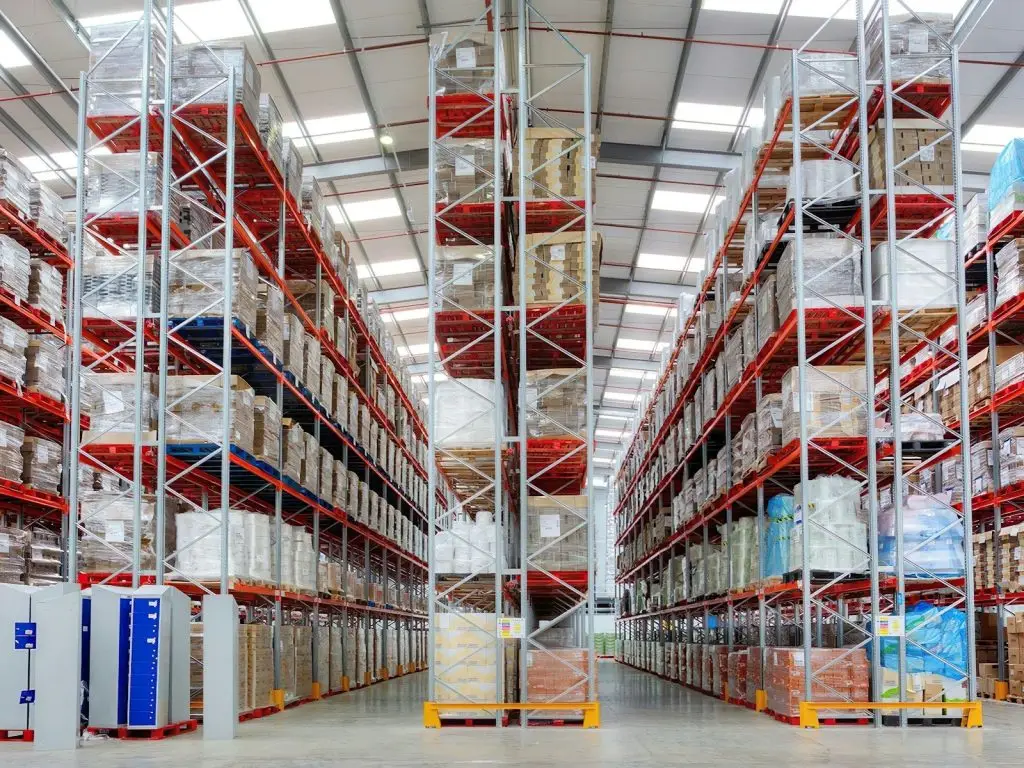
Your warehouse is the physical foundation of the business. Buyers will assess it carefully — not just its condition, but its strategic value. Location, configuration, owned versus leased, and the technology supporting it all factor into how a buyer values the infrastructure.
In Atlantic Canada, warehouse location relative to population centres matters. A distribution facility in Moncton, positioned between Halifax and the New Brunswick interior, with cross-border access to Maine, has different strategic value than an isolated warehouse that requires significant secondary transportation to serve customers. Buyers understand regional logistics economics and will price infrastructure accordingly.
The owned-versus-leased question is particularly important for distribution businesses with significant warehouse assets. Owned warehouse real estate can represent substantial value — value that is sometimes better realized through a separate real estate transaction than bundled into the business sale. For leased facilities, buyers will scrutinize the lease term, renewal options, and assignment rights. A lease that expires in 18 months is a liability. A long-term lease with assignment provisions and renewal options at defined rates is an asset.
What buyers assess in the warehouse:
- Dock door count and configuration relative to throughput volumes
- Racking type, condition, and utilization — over-utilized facilities signal capacity constraints; significantly under-utilized facilities raise cost questions
- Cold storage capacity if applicable to your product mix, and the age and condition of refrigeration systems
- WMS integration with order management and purchasing systems
- Third-party logistics relationships and their contractual basis
- Last-mile delivery capability — owned fleet, third-party, or a combination
Factor 5: Owner Dependency in Supplier Relationships
This factor is distinct from general owner dependency — it is specific to distribution and it is one of the most dangerous transaction risks in the sector. It deserves its own entry on this list.
In many distribution businesses, the relationship with the supplier’s key contacts is personal to the owner. The owner has been the face of the distributorship for twenty years. The supplier’s regional sales manager is a personal friend. The supplier principal calls the owner directly when issues arise. The distribution agreement — formal or informal — exists because of the owner’s personal credibility with the supplier.
When the owner sells, that personal relationship doesn’t transfer. The buyer acquires the legal agreement, but not the trust and history that made it valuable. In some cases, the supplier takes the ownership change as an opportunity to rationalize their distribution arrangements — consolidating into fewer distributors, going direct to key accounts, or negotiating new terms that are less favourable.
The mitigation is structural. Distribution agreements that are held formally by the company, not the individual. Supplier relationships managed by a senior employee, not solely by the owner. Regular contact between supplier principals and company management that doesn’t require owner involvement. Documented performance under the agreement — sales growth, market penetration, customer service metrics — that demonstrates the relationship’s value is company-level, not personal.
If your supplier relationships are primarily personal today, the two-year period before a sale is the time to begin transitioning them to company-level relationships. This is one of the most valuable pre-sale investments a distribution owner can make.
Factor 6: Gross Margin Profile and Pricing Discipline
Distribution businesses span an enormous range of gross margin profiles. Commodity distributors — bulk food ingredients, basic industrial consumables, standard building materials — often operate at gross margins of 8–12%. Value-added distributors — technical industrial supplies, specialty food ingredients, branded specialty products with service elements — operate at 25–35% or higher.
Where your business sits on this spectrum significantly affects its valuation. Not because high margins are always better, but because gross margin stability and pricing authority are what buyers are evaluating. A distributor with a clear, defensible reason for its margin — exclusive agreements, private label development, value-added services, technical expertise that customers pay for — is a different business from one where margin is subject to competitive pressure on every transaction.
Pricing discipline matters. Buyers will examine your gross margin trend over three to five years and look for patterns. Margin compression — even modest, gradual compression — raises questions about competitive positioning and pricing authority. Buyers will ask: what happens to margin in year two after I own this? If the honest answer is further compression, that gets priced into the offer.
Private label development — house-brand products where the distributor controls the sourcing and pricing — is a margin-improvement strategy that sophisticated distribution buyers specifically look for. Even a small private label programme that demonstrates the capability is a positive signal.
Factor 7: Technology and ERP/WMS Investment
Distribution is an operationally intensive business. Purchasing, receiving, putaway, order picking, shipping, invoicing, and accounts receivable management all happen at high volume and at speed. Businesses that run these processes on modern, integrated systems operate with lower error rates, lower labour costs per unit shipped, and better management information than businesses running on spreadsheets, legacy systems, or manual processes.
Buyers pay for operational efficiency. They also pay less — and apply higher risk discounts — for businesses where technology gaps will require significant post-acquisition investment to address.
A modern warehouse management system reduces picking errors, improves inventory accuracy, and lowers the labour cost per order shipped. An ERP that integrates purchasing, AP/AR, inventory, and management reporting gives buyers confidence that the financial information they received during due diligence reflects the actual operating performance of the business.
The absence of these systems is increasingly a negative signal. It suggests that reported financials may not be fully reliable, that inventory data may not be accurate, and that the post-acquisition investment requirement is unknown. Buyers who are uncertain about any of these things adjust their price accordingly.
For a distribution business contemplating a sale in the next two to three years, an honest technology assessment — and the willingness to invest in closing the most significant gaps — is worth undertaking.
The Controllable Nature of These Factors
The thread running through all seven of these factors is that they are, to varying degrees, within your control. Supplier agreements can be formalized and protected. Customer concentration can be addressed. Inventory management can be improved. Warehouse infrastructure can be documented and optimized. Owner dependency in supplier relationships can be transitioned. Margin profile can be improved. Technology gaps can be closed.
None of this happens in six months. The improvements need to show up in your operations and your financial statements in ways that a buyer can verify — and that takes two to three years of consistent work before a sale process begins.
A distribution business that scores well on five of these seven factors will command a meaningfully higher multiple than one that scores well on two. In Atlantic Canada’s distribution market, where buyers are sophisticated and due diligence is thorough, the preparation work pays.
For a distribution business generating $750,000 in EBITDA, the difference between a 3.5× and a 5× multiple is $1.125 million in sale price. That gap is driven almost entirely by these seven factors — and most of them are within your control.
The right time to start is not when you’ve decided to sell. It’s two to three years before that decision — while you still have time to make the improvements that will be reflected in the price a buyer pays.
Want to understand where your distribution business stands on these seven factors? Book a confidential assessment with Conexus M&A. We specialize in Atlantic Canadian distribution M&A and can give you a realistic picture of where you stand and what it would take to improve it.