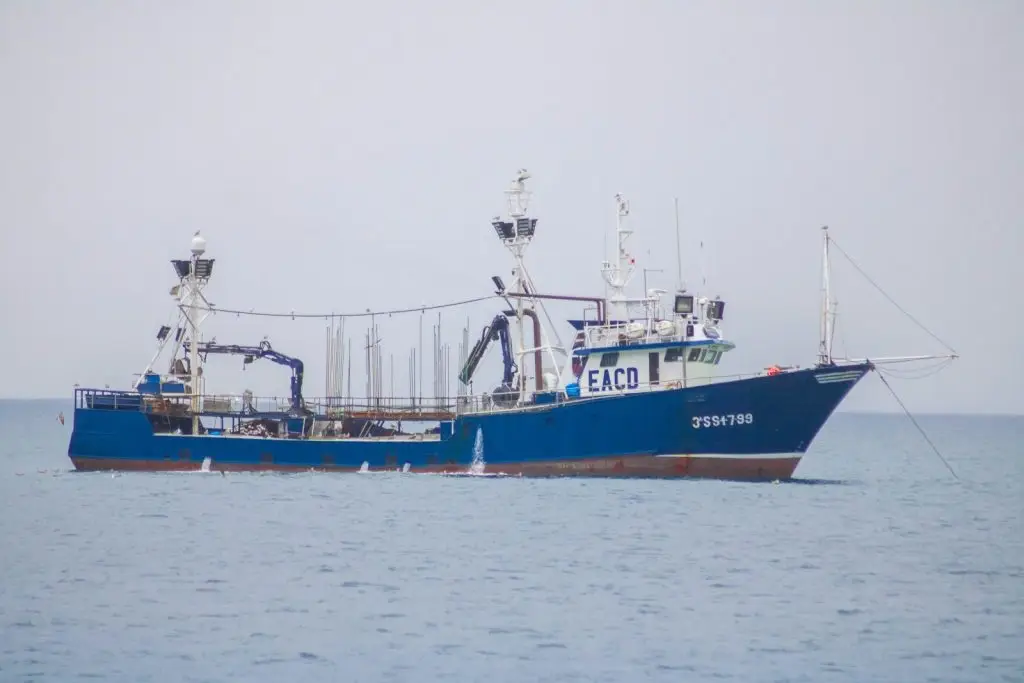
Fishing enterprise owners sometimes think of their business value primarily in terms of their vessel — the boat, the gear, the electronics, maybe the berth. These things matter. But for a well-licenced Atlantic Canadian fishing enterprise, the quota and licenses are almost always the dominant asset and the primary driver of enterprise value. In some cases, dramatically so.
A lobster license in LFA 34 can be worth $2–4 million on its own. A modest snow crab ITQ allocation has appreciated to the point where it can exceed the value of the vessel that fishes it by a wide margin. Owners who have held these licenses for twenty or thirty years sometimes don’t fully appreciate the asset they’ve accumulated — until they sit down with someone who has sold comparable licenses recently and has real market data.
This article explains how a commercial fishing enterprise in Atlantic Canada is actually valued: what methods are used, how quota and vessel are treated differently, how earnings are normalized for a seasonal business, and what pitfalls to avoid when you’re preparing for a transaction.
The Two-Asset Problem: Vessel Plus Quota, Each Valued Differently
A commercial fishing enterprise has two fundamentally different types of assets, and they are valued by fundamentally different methods.
The vessel and gear are valued at fair market value (FMV) by an independent marine survey. FMV means what a willing buyer would pay a willing seller in an arm’s-length transaction for that specific vessel in its current condition. It is not replacement cost, and it is not book value on the balance sheet. For a well-maintained vessel, FMV may exceed book value significantly. For a vessel with deferred maintenance and aging systems, FMV may be well below book value.
The quota and licenses are valued by reference to comparable market transactions — what similar licenses have sold for recently in the same species area, with similar allocation volumes. This is closer to real estate comparable sales than it is to a financial statement analysis. A qualified advisor or quota broker who tracks these transactions will have relevant market data. DFO records and industry contacts are the primary sources.
The going-concern business generates annual earnings (EBITDA) that serve as a check on the combined asset value. If the sum of the assets exceeds the capitalized earnings, the asset approach sets the floor on value — which is common in quota-heavy enterprises where DFO policy constrains the buyer pool.
Understanding these three components separately, before attempting to arrive at a total enterprise value, is the starting point for any serious valuation of a fishing enterprise.
The Three Valuation Methods Applied to Fishing Enterprises
Professional business valuators use three approaches, and in a fishing enterprise context, all three are relevant — but they play different roles.
The Income Approach asks: what is the normalized annual earnings of this enterprise, and what multiple of those earnings would a buyer pay? Normalized EBITDA is calculated across three to five seasons, removing non-recurring items and properly accounting for seasonal costs. A multiple is then applied based on the risk and quality of those earnings. For fishing enterprises in Atlantic Canada, EBITDA multiples typically range from 3× to 5×, with the higher end of that range reserved for enterprises with strong quota, clean compliance, stable crew, and documented earnings quality.
The limitation of the income approach in fishing enterprise M&A is that the earnings yield on quota can be relatively low compared to quota market value. If $3 million in lobster license value generates $200,000 in EBITDA contribution, a 5× EBITDA multiple implies only $1 million of value for the quota in the income approach — but the quota market says it’s worth $3 million. This disconnect is common, and it’s why the asset approach often sets the floor on value.
The Asset Approach adds up the fair market value of the enterprise’s assets: vessel at survey value, quota and licenses at market comparable value, gear and equipment, and working capital. This approach is particularly relevant when DFO policy constrains the buyer pool — if only a limited number of qualified buyers can legally acquire the license, the income approach may overstate what that constrained buyer pool will pay, but the asset approach captures what the quota itself is worth in the market.
The Market Approach looks at comparable transactions — other fishing enterprise sales in the same region and species area, at similar quota volumes. This is the most direct evidence of what buyers actually pay, but comparable transaction data for fishing enterprises is not always publicly available and requires advisors with real market knowledge to access and interpret.
In most Atlantic Canadian fishing enterprise valuations, the asset approach sets the floor and the income approach tests the ceiling. The realistic transaction price sits between them, shaped by how motivated the buyer is and how constrained the buyer pool is by DFO policy.
Quota and License Valuation: The Core Asset
Establishing the market value of quota and licenses is the most important — and most specialized — part of valuing a fishing enterprise. The process looks different depending on the species and license type.
For lobster licenses, value is primarily established by comparable license sales in the same Lobster Fishing Area (LFA). LFA 34 licenses in SW Nova Scotia command the highest values — $2–4 million per license as a broad range, with specific values depending on the number of traps authorized and recent market activity. LFA values drop significantly in lower-productivity areas. A qualified advisor tracking the lobster license market will know what licenses have sold for in the past twelve to eighteen months in each LFA.
For snow crab, shrimp, and other ITQ species, quota is allocated in tonnes and trades at a price per tonne established by arm’s-length transactions. ITQ markets are more transparent than license markets because more transactions occur at known prices. The price per tonne varies by zone and by current TAC (Total Allowable Catch) levels — rising TAC supports quota value; TAC reductions reduce it. Crab quota in zones 4R/4S, 12, 19, and 23-24 are each priced differently based on productivity and market access.
For scallop, herring, and groundfish, quota mechanics and values vary by zone and species, and some groundfish species have experienced dramatic declines in TAC that have affected quota value significantly. Current market data is essential; historical values may be misleading.
The DFO transfer process adds a timing dimension to quota valuation. License and quota transfers must be approved by DFO, and the process — including notification requirements, transfer forms, and administrative review — can take weeks to months depending on the license class and DFO regional workload. Experienced buyers and advisors build this into the transaction timeline.
Vessel Condition: The Survey Is Your Valuation
The vessel is valued by an independent marine survey — and the survey is the valuation. There is no shortcut. Book value on the balance sheet is irrelevant for transaction purposes. What matters is what a qualified marine surveyor determines the vessel is worth in its current physical condition.
A Transport Canada marine survey for transaction purposes will cover:
- Hull condition — construction material (fibreglass, steel, aluminum); signs of osmotic blistering, corrosion, cracking, or structural compromise; the date and findings of the most recent haul-out inspection
- Engine and mechanical systems — engine hours; service history documentation; condition of transmission, hydraulics, and auxiliary systems
- Safety equipment compliance — life rafts, EPIRBs, flares, fire suppression systems; all within Transport Canada service and expiry requirements
- Electronics and navigation systems — chart plotter, radar, VHF, AIS, echo sounder, autopilot; assessed for age, condition, and whether they meet current commercial fishing requirements
- Gear condition — traps, trawl gear, lines, net as applicable to the fishery; condition affects first-season operating cost for a buyer
The practical point for sellers is this: every dollar of deferred maintenance that a buyer’s surveyor finds will come back to you as a price reduction request. If the engine service is overdue, if the life raft is expired, if the hull has osmotic blistering that hasn’t been treated — the buyer’s survey will find it. You are better off addressing these issues before going to market, at your own cost and on your own schedule, than having them surface in a buyer’s due diligence.
Commission a pre-sale survey before you start the sale process. It will cost a few thousand dollars and it will tell you exactly what a buyer is going to find. Fix the material items. Document everything you’ve fixed. Then go to market with confidence.
Normalized EBITDA in a Seasonal, Weather-Dependent Business
EBITDA is Earnings Before Interest, Taxes, Depreciation, and Amortization — essentially the operating cash earnings of the business before financing costs and accounting adjustments. In a fishing enterprise, calculating a meaningful normalized EBITDA requires more care than in most businesses.
Use multiple years. A single season’s results can be distorted by weather, by early or late ice, by quota reductions, or by a vessel breakdown in peak season. Buyers want to see a 3–5 year normalized view. Pick the most representative range, not the best two years.
Account for crew share arrangements correctly. Most commercial fishing operations pay crew on a share basis — a percentage of the gross catch value after deducting certain costs (fuel, bait, ice). Share arrangements are an operating cost, and they need to be correctly reflected in the normalized EBITDA. If the owner-operator is the skipper and is drawing a “share” that is really owner compensation, that needs to be normalized — replaced with a market-rate skipper wage for the purposes of the earnings calculation.
Include all vessel operating costs. Fuel, bait, ice, gear replacement, vessel insurance, annual maintenance, haul-out costs, and berth fees are all operating costs of the fishing enterprise. These are sometimes understated in informal financial records. A buyer will model them at realistic levels; the seller should too.
Off-season costs are real costs. Insurance, berth fees, loan payments on vessel financing, and any year-round crew wages continue through the off-season. They belong in the annual EBITDA calculation, not just the season-months.
Debt service coverage matters. Buyers and their lenders will calculate whether the normalized annual EBITDA adequately services the enterprise’s debt — and whether there is a margin of safety for a below-average season. An enterprise where EBITDA barely covers debt service in a good year is a higher-risk acquisition than one with a comfortable coverage ratio.
| EBITDA Item | Normalization Consideration |
|---|---|
| Gross catch revenue | Average over 3–5 seasons; note any TAC changes affecting volume |
| Crew share | Ensure owner-skipper share is replaced with market-rate skipper wage |
| Fuel and bait | Volatile; use multi-year average or current market prices |
| Vessel maintenance and repair | Normalize out major one-time repairs; ensure routine maintenance is fully included |
| Insurance | Annual cost; include hull, P&I, and crew coverage |
| Berth and harbour fees | Year-round cost; confirm documented access terms |
| Owner compensation add-back | Add back excess owner compensation; replace with market-rate management cost |
Common Valuation Pitfalls in Fishing Enterprise M&A
The following mistakes show up repeatedly in fishing enterprise transactions, and each one either inflates the seller’s expectations beyond what the market will support, or allows a buyer to pay less than they should.
Including vessel value in an EBITDA multiple as if quota wasn’t the primary asset. If you apply a 5× EBITDA multiple to the total enterprise EBITDA without separately accounting for the quota, you may significantly undervalue the quota — whose market value may be far higher than its implied value in the EBITDA multiple. The vessel and quota need to be broken out before applying a multiple to the earnings stream that remains.
Assuming DFO will approve any qualified buyer. DFO approval is not a rubber stamp. The owner-operator policy, license conditions, and any compliance history issues can affect whether a proposed transfer proceeds. Sellers who assume this step is administrative and automatic are sometimes surprised. Build realistic timing into any transaction plan.
Not accounting for deferred vessel maintenance. A buyer who commissions a survey and finds $150,000 in deferred maintenance has three options: walk away, reduce the offer by $150,000, or require the seller to cure the deficiencies. None of these are good outcomes for a seller who could have addressed the issues proactively. Pre-sale maintenance is almost always worth the cost.
Misrepresenting the crew situation. If the experienced skipper is leaving with the owner, that is material information a buyer needs early — not as a surprise in due diligence. Corporate buyers will factor skipper transition risk into their offer price. Being transparent early preserves deal momentum; late disclosure costs more.
Ignoring compliance history. A DFO compliance issue that the seller knows about but doesn’t disclose will surface in the buyer’s due diligence. At that point it’s no longer just a regulatory matter — it’s a disclosure credibility issue. Full, proactive disclosure of any compliance history, with legal advice on how to present it, is always the better approach.
Using a single peak year as the base for valuation. An exceptional season produces earnings that don’t represent what a buyer can reliably expect to earn. Using a peak year creates price expectations the market won’t support, and wastes time when buyers arrive at a different number from their own normalized analysis.
Preparing for a Fishing Enterprise Valuation
A thorough valuation requires a specific documentation package that goes beyond what most businesses need to compile. Starting to assemble this package well before a sale process begins — ideally one to two years in advance — means the information is clean, complete, and ready when buyers and their advisors ask for it.
- DFO documentation package — current license certificates, quota allocation notices (by species and zone), conditions of license, annual catch history vs. quota for the past five years, any DFO correspondence relating to compliance or license conditions
- Vessel survey — commission a pre-sale survey from a qualified marine surveyor; address material findings before going to market; maintain the documentation of corrective work done
- Financial statements with catch volume reconciliation — three to five years of financial statements (ideally reviewed or audited); a reconciliation of catch volumes to DFO landings data; normalization schedules prepared with an accountant familiar with the fishing industry
- Crew agreements — documented crew share or wage arrangements; any employment agreements with key crew or the skipper; a factual summary of crew tenure and intentions
- Berth and harbour access documentation — lease or licence agreements for berth space; harbour authority membership documentation; any informal arrangements formalized where possible
- Processor and buyer relationships — copies of any selling agreements or preferred supplier arrangements; a summary of price history relative to dock price benchmarks
- Compliance history summary — a candid, legally reviewed summary of any DFO, Transport Canada, or CFIA compliance matters in the history of the enterprise
A Fishing Enterprise Valuation Requires Specific Expertise
A general business valuator or broker who has not specifically transacted fishing enterprises will not have the market data to value quota accurately, will not know the DFO policy dimensions that affect who can buy and what structures will work, and will not know how to normalize earnings for a seasonal, weather-dependent operation with crew share arrangements.
The difference between a valuation done by someone with fishing enterprise experience and one done by a generalist can easily be measured in hundreds of thousands of dollars — either because the quota is undervalued, or because unrealistic price expectations are set that waste time and damage the sale process.
The quota and licenses you have accumulated over decades of fishing represent real, substantial wealth. The vessel you’ve maintained, the crew you’ve developed, the processor relationships you’ve built — these are all valuable. Getting a valuation that properly captures all of it, and a sale process that reaches the right buyers at the right price, requires advisors who have done this before in this specific sector.