
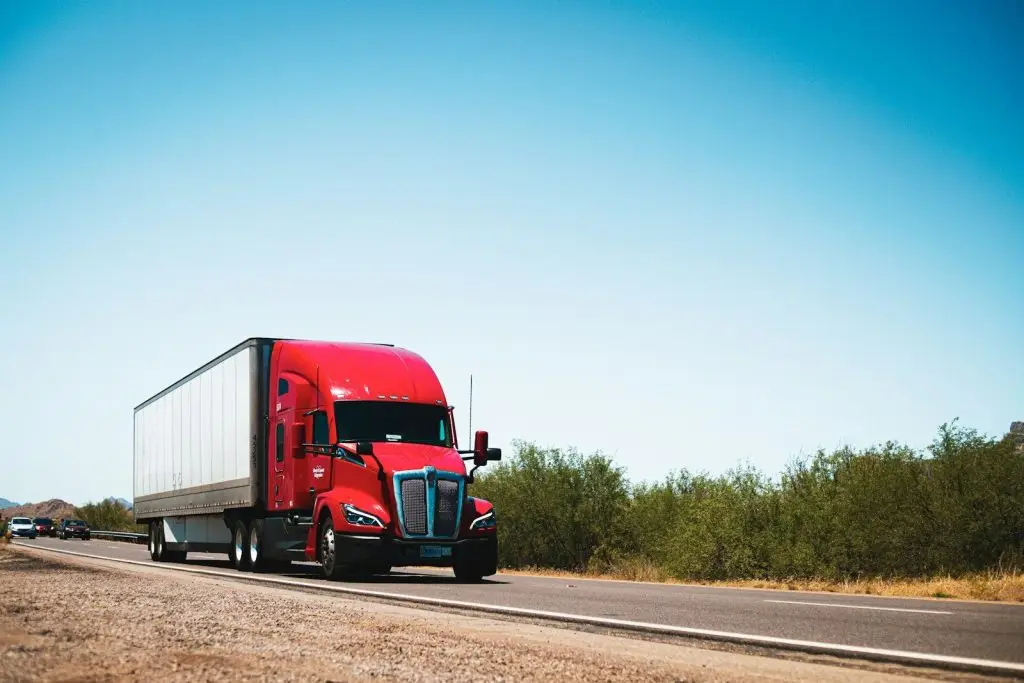
Most transportation business owners, when asked what their company is worth, start with the fleet. It’s natural. The trucks are the most visible, tangible part of the business. You can walk the yard, count the units, look up replacement costs, and arrive at a number. It feels like a valuation.
It isn’t. Or rather, it’s a starting point — and usually not even the most important one. The routes your drivers run every week, the contracts that guarantee next year’s freight volume, the operating authority that took years to build, and the compliance record that tells a buyer whether your business is manageable or a regulatory liability — these are what sophisticated buyers are really paying for. The fleet is an asset they’re inheriting. The business is what they’re buying.
This article explains how transportation companies are valued in practice: the methods used, the adjustments that matter, and the factors that determine where on the multiple range your business lands.
The Challenge of Valuing a Capital-Intensive, Thin-Margin Business
Transportation is not a high-margin business. EBITDA margins in trucking typically run 8–15%, depending on the segment. LTL operators, flatbed carriers, and bulk liquid haulers each have different cost structures, but all of them are working with margins that leave little room for error. Fuel spikes, driver wage increases, a major maintenance event on the fleet, or a customer who pays slowly can compress margins in a quarter.
This thin-margin reality means that a small difference in normalized EBITDA produces a large swing in business value. A carrier generating $1.5 million in revenue with a 10% EBITDA margin is running at $150,000 in earnings — a business worth perhaps $500,000–$750,000 on an income basis. The same carrier at a 12% margin — $180,000 in EBITDA — might be worth $630,000–$900,000. Thirty thousand dollars in margin makes a $150,000–$200,000 difference in value.
The first challenge in transportation valuation is therefore getting the normalized EBITDA right. This requires more adjustments than in most sectors:
- Owner compensation normalization — particularly in businesses where the owner also drives, dispatches, or performs maintenance. The replacement cost of those functions must be estimated and subtracted from earnings
- Fuel cost normalization — three-year average diesel prices are often used to smooth out the volatility that makes any single year unrepresentative
- One-time maintenance normalization — a year with a major engine rebuild or a significant accident repair needs to be identified and adjusted out of recurring operating costs
- Owner-operator payments — if you use owner-operators, their payments run through operating expenses and affect EBITDA in a way that needs to be clearly explained to buyers
- Non-recurring revenue — a one-time government contract, an emergency freight movement, or a spot market windfall should not be included in normalized earnings
The normalized EBITDA is the number that buyers apply a multiple to. Getting it right is the foundational step in the entire valuation process.
The Three Valuation Methods Applied to Transportation
Formal business valuations draw on three approaches: the income approach, the asset approach, and the market approach. In transportation, all three are relevant — but they play different roles depending on the specific business being valued.
The income approach is the primary valuation method for a profitable transportation business. It capitalizes the normalized EBITDA by applying a market multiple, producing a business enterprise value. For most carriers with stable earnings and a good compliance and customer profile, this is where the bulk of the value is established.
The asset approach becomes more relevant when a carrier has thin or erratic earnings but significant fleet and real estate value. If a business is generating minimal EBITDA but owns a modern fleet outright, the liquidation or orderly wind-down value of those assets may exceed what an income approach produces. Asset-based valuation is also the floor check — no rational buyer will pay an income-based multiple that is significantly below the value of the assets they’d be acquiring.
The market approach uses comparable transaction data to calibrate the multiple. What are similar-sized carriers in Atlantic Canada or comparable Canadian markets selling for? What multiples have been paid for LTL operators, bulk carriers, or refrigerated fleets in recent transactions? This data is not always publicly available in Canadian private markets, but advisors with active deal experience have access to transaction comps that inform the multiple range discussion.
Transportation businesses in Atlantic Canada currently trade in a range of approximately 3.5× to 6× normalized EBITDA. On a business with $800,000 in normalized EBITDA, the difference between a 3.5× and a 5.5× multiple is $1.6 million in sale price. The factors that determine where you land in that range are largely within your control — if you know what they are and act on them early enough.
Fleet Valuation: FMV vs. Book vs. Replacement Cost
The fleet must be valued as part of any transportation business sale, and this is where owners most often have incomplete or misleading information going into a process. There are three numbers that matter — and they are almost never the same.
Book value is the accounting value on your balance sheet after depreciation. It follows CRA-prescribed depreciation schedules and may have little relationship to what a unit is actually worth in the used equipment market. A 2018 Kenworth tractor with 700,000 km and strong maintenance records might have a book value of $25,000 but a fair market value of $85,000. Conversely, a unit that has been poorly maintained might carry a book value higher than what it would bring at auction.
Fair market value (FMV) is what each unit would sell for between a willing buyer and willing seller in the current used equipment market. This is the number buyers and their lenders use. It is typically established through an independent appraisal — either a desktop appraisal using current auction results and market data, or a physical inspection appraisal for larger fleets.
Replacement cost is what new equivalent units would cost to purchase today. This is relevant to buyers in a specific way: if your fleet is aging and will need to be replaced within three to five years, the buyer estimates the capital required and applies a deferred capex adjustment to reduce their offer. They are not paying you full price for a fleet they’ll have to replace immediately after closing.
Lease obligations are a separate consideration. If units are under operating leases, the lease obligations typically transfer with the business or must be settled at closing. If units are financed (capital leases or term loans), the net equity in those units — FMV minus outstanding debt — is what contributes to asset value. A clear schedule of owned vs. financed vs. leased units, with associated obligations, is essential for any serious valuation or buyer due diligence process.
Operating Authority and Route Network as Intangible Assets
Operating authorities — federal carrier code, provincial operating licenses, cross-border FMCSA registration — are legal permissions to operate that took time, compliance history, and regulatory engagement to obtain. They transfer with the business on change of control, but the transfer is not automatic or costless, and the process must be managed carefully.
For buyers who want to operate in a specific corridor quickly, the existence of clean, transferable operating authority has real standalone value. A carrier with established cross-border authority through the New Brunswick–Maine corridor, in good standing with both Transport Canada and the FMCSA, has an asset that a buyer wanting to start US-Canada runs would otherwise have to obtain from scratch — a process that takes months and requires a compliance history to support.
Route density is a related intangible that is harder to quantify but equally real. A carrier with dense, efficient routes — high load factors in both directions, minimal deadhead kilometres, established shipper relationships along the corridor — generates better margins and more predictable revenue than a carrier with equivalent equipment but thin route coverage.
Terminal locations matter significantly to national buyers. Owned or long-term leased dock facilities in Halifax, Moncton, Saint John, Fredericton, or St. John’s are infrastructure that anchors a regional network. The capital cost of building a terminal from scratch — land, building, dock equipment, yard space — is substantial. Buying a carrier with existing terminal infrastructure eliminates that cost and timeline entirely, and buyers price that accordingly.
The NSC/CVOR Safety Rating: A Transaction Prerequisite
The National Safety Code (NSC) rating is the most important compliance credential in a Canadian carrier’s regulatory profile, and it deserves separate treatment in any valuation discussion — because it is not a value driver. It is a transaction prerequisite.
A carrier rated Satisfactory is in good standing and can proceed to a sale process without compliance-related obstacles. A carrier rated Conditional is under heightened regulatory scrutiny; the rating signals that the carrier has failed one or more NSC standards and is on a remediation track. A carrier rated Unsatisfactory is in the most serious regulatory position — and is, for practical purposes, unsellable to any reputable buyer.
No credible national carrier or PE-backed platform will acquire a carrier with an unsatisfactory NSC rating. The regulatory liability is unquantifiable, the reputational risk to their broader operations is real, and the assumption of compliance responsibility for a carrier in active regulatory default is not something their legal and risk teams will approve. An unsatisfactory rating must be remediated — typically through a formal improvement plan with the provincial regulator — before a sale process can proceed. This can take 12–24 months.
CVOR (Commercial Vehicle Operator’s Registration) certificates in Ontario-regulated contexts follow similar logic. Buyers with Ontario operations will evaluate CVOR performance history carefully for carriers that run Ontario routes.
Compliance history also includes hours of service (HOS) compliance, ELD (Electronic Logging Device) mandate compliance, Commercial Vehicle Inspection Program (CVIP) records by province, and driver abstract summaries across the fleet. Buyers conduct compliance reviews as a formal part of due diligence, and gaps or violations that surface at that stage — particularly if they weren’t disclosed proactively — can cause a deal to fall apart or result in significant price reductions.
Working Capital Complexity in Transportation
Working capital — the difference between current assets and current liabilities at closing — is a standard part of every business sale. In transportation, the working capital cycle has specific characteristics that make it more complex to analyze than in most sectors, and that can lead to disputes at closing if not addressed carefully upfront.
Driver payroll runs weekly. Shipper receivables are typically billed on invoice terms of 30–60 days. Fuel costs are paid on short terms — weekly or biweekly with fuel card providers. Insurance premiums are often prepaid annually. This creates a cash flow timing mismatch that is structural to the industry: you pay drivers before you collect from shippers, and you carry that float continuously.
What this means in a sale context is that “normal” working capital in a carrier is not zero — it reflects this operational timing gap. The purchase agreement will typically specify a target working capital level at closing, and deviations from that target result in post-closing adjustments. Establishing the right target — and agreeing on how it is calculated — requires understanding the specific cash cycle of your business.
Fuel payables timing is particularly important in months where diesel prices spike. A large outstanding fuel card balance at closing that is higher than the normalized average needs to be explained in the working capital analysis. Similarly, a large prepaid insurance balance that is higher than normal should be captured as an asset in the working capital calculation.
Common Valuation Pitfalls in Transportation
Transportation owners and their advisors make predictable mistakes in valuation. Understanding them in advance helps you avoid them.
- Over-reliance on replacement cost. Replacement cost tells you what a new fleet would cost. It does not tell you what your business is worth. Buyers are paying for earnings power, not for the privilege of owning trucks.
- Ignoring deferred fleet capex. If your fleet is aging and replacement is imminent, buyers will model the capital requirement and reduce their offer accordingly. Pretending the fleet is younger than it is, or that replacement is farther away than it is, will surface in due diligence and damage your credibility.
- Owner-driver EBITDA inflation. An owner who drives full-time but takes no salary is generating EBITDA that is artificially high. The buyer will add back a market-rate driver wage to normalize the earnings, which reduces the EBITDA base — and therefore the value.
- Undisclosed compliance gaps. Compliance problems that are not disclosed proactively and are discovered during buyer due diligence are among the most destructive events in a transportation sale process. They suggest an owner who was not being forthcoming, and they cause buyers to question every other representation they’ve been given.
- Customer concentration in one or two dedicated contracts. A business that is 60% dependent on a single shipper contract is not generating diversified, resilient earnings — it is generating fragile earnings with the appearance of stability. Buyers will apply a heavy discount for that concentration.
Preparing for a Transportation Valuation
The best time to begin thinking about business valuation is not when you’ve decided to sell. It is two to three years before. That timeline gives you the opportunity to address the factors that compress value — aging fleet, compliance gaps, customer concentration, thin margins — before buyers are evaluating them.
Concretely, preparation for a transportation valuation means:
- Assembling a complete, unit-by-unit fleet register with condition and maintenance documentation
- Commissioning an independent fleet appraisal at FMV — not relying on book value
- Confirming NSC/CVOR ratings are current and satisfactory, and addressing any open compliance items
- Reviewing driver files for completeness — licence abstracts, medicals, training records, HOS logs
- Documenting all operating authorities, their current standing, and the change-of-control transfer process for each
- Reviewing customer contracts for assignability and term remaining
- Preparing three years of financial statements that separate fuel costs, owner compensation, and any one-time items clearly
A transportation business that arrives at a sale process with this documentation in order is positioned to move quickly, answer buyer questions confidently, and command the upper end of the market multiple range. One that arrives without it will spend months in due diligence explaining gaps — and buyers will use every gap they find to justify a lower price.
Valuation is not just arithmetic. It is preparation, documentation, and positioning. In a capital-intensive, heavily regulated sector like transportation, the work you do before a buyer ever sees your business is the work that determines what you ultimately receive for it.