If you own a wholesale or distribution business in Atlantic Canada, there is an active, well-funded buyer market looking for businesses like yours right now. National distribution consolidators are expanding their regional footprints. Private equity platforms are executing roll-up strategies across food, industrial, and specialty distribution categories. Manufacturers are re-evaluating whether to own their distribution channels directly.
For most of the past two decades, owners of regional distribution businesses in Atlantic Canada faced a buyer market that was thin and largely local. That has changed. The same consolidation dynamics reshaping distribution nationally are now reaching Atlantic Canada with force, and the window during which regional independents represent attractive, reasonably priced acquisition targets is not indefinitely open.
Understanding who these buyers are, what they want, and how they think about your business is the most important preparation you can do before deciding whether — and when — to sell.
Why National Distributors Are Looking East
For a national distribution company operating across Canada, Atlantic Canada has historically been a market-coverage gap. The region is geographically distinct, served primarily by regional independents, and complicated enough logistically that organic market entry is slow and expensive. Acquiring an established regional distributor solves all of these problems at once.
The market coverage completion thesis is the most common strategic rationale. A national foodservice distributor whose coverage extends from Vancouver to Quebec but not reliably into Atlantic Canada is leaving revenue on the table and cannot serve national chain customers consistently across the country. Acquiring an Atlantic Canadian distributor with established accounts closes that gap immediately. The buyer doesn’t need to build the warehouse, hire the sales team, develop the customer relationships, or negotiate supplier agreements from scratch. They acquire all of that ready-made.
Atlantic Canada is also, in many distribution categories, an underserved market relative to Central Canada. National distributors who have operated primarily in Ontario and Quebec sometimes discover that their supplier relationships — including exclusive or preferred arrangements — technically cover Atlantic Canada but have never been actively developed in the region. Acquiring a regional distributor that has already built volume in those categories accelerates market penetration dramatically.
The economics of direct-ship versus regional distribution also drive this logic. In some categories, a national distributor can serve Atlantic Canadian customers directly from a central warehouse in Ontario. In others — fresh and refrigerated food, time-sensitive MRO supplies, building materials — regional distribution economics are strongly superior. When the numbers favour regional distribution, acquiring a functioning regional operation is far more economical than building one.
Why Private Equity Is Building Distribution Platforms
Private equity has been actively building distribution platforms across Canada for the better part of a decade. The investment thesis is well-established and consistently applied: acquire a regional distribution business with a defensible market position, use it as a platform, then execute add-on acquisitions that build scale across purchasing, logistics, and customer coverage.
The fundamental appeal of distribution to PE is structural. High customer switching costs — customers who have integrated your ordering systems, delivery schedules, and product catalogues into their operations are expensive and disruptive to replace — create recurring, predictable revenue. Scale economics in purchasing, warehousing, and delivery create meaningful margin improvement as the platform grows. And the fragmentation of regional distribution markets means there are many acquisition targets available at reasonable prices, with no single dominant competitor forcing a bidding war on every deal.
Atlantic Canada fits this thesis well. The distribution sector is fragmented, the market is large enough to support a serious regional platform, and the independent operators who built these businesses over decades are reaching the age at which a sale is a natural consideration. PE buyers are disciplined and well-capitalized, and they move quickly when they identify a target that fits their model.
PE-backed distribution platforms are not passive financial investors. They bring purchasing scale, technology infrastructure, and operational expertise that can accelerate growth — but they also expect management participation, technology readiness, and a clear growth story from the businesses they acquire.
The implication for sellers: PE buyers are sophisticated, they do thorough due diligence, and they will identify and price every operational weakness they find. Preparation is not optional if you want a competitive offer from a serious PE buyer.
What Each Buyer Type Wants
National strategic buyers and PE platforms are both active in Atlantic Canadian distribution M&A, but they are looking for different things and will evaluate your business through different lenses.
National strategic buyers are primarily buying market position. Their due diligence is focused on:
- Your supplier relationships — especially exclusive or preferred distribution agreements, and whether they will survive a change of control
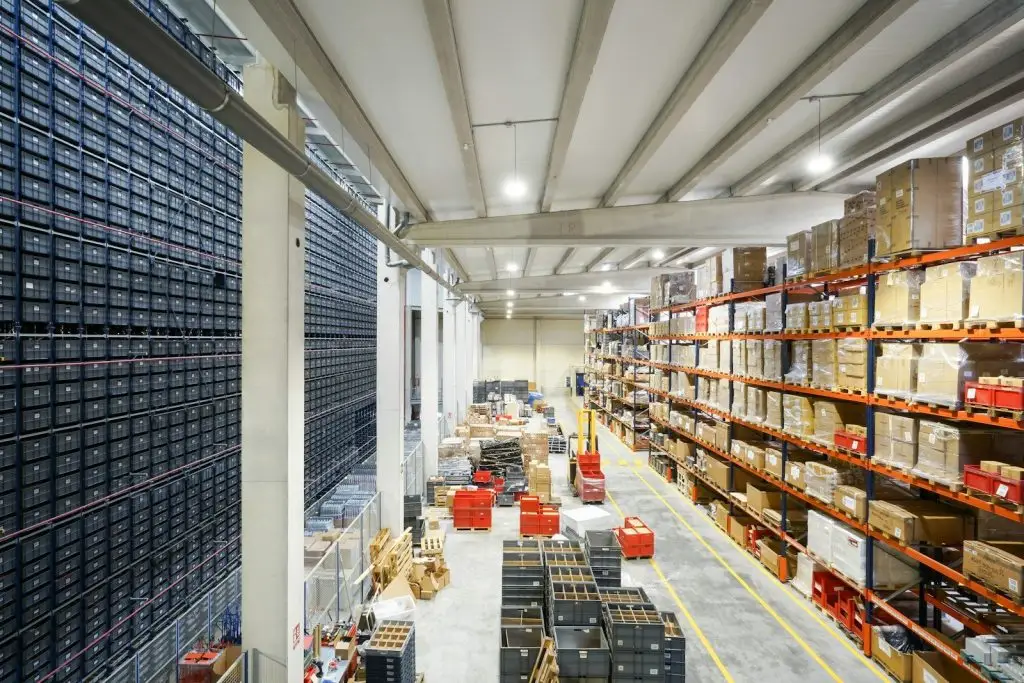
- Your warehouse footprint — location, configuration, capacity, owned versus leased, and how it fits their existing network
- Your customer list — the accounts you serve, their size and tenure, the contractual basis for those relationships, and the concentration risk
- Your regional market position — what share of addressable volume you represent, what accounts you don’t have and why, what the competitive landscape looks like
- Integration feasibility — how quickly and cleanly they can absorb your operations into their systems and organizational structure
Strategic buyers pay premiums when they identify synergies — when your business fills a genuine gap in their operations and allows them to do something they couldn’t do without you. They may pay less attention to your trailing EBITDA multiple than a PE buyer would, because their calculation includes the synergy value that they will unlock post-acquisition.
Private equity buyers are primarily buying earnings and growth potential. Their due diligence is focused on:
- Normalized EBITDA — what the business actually earns after removing owner-specific expenses, non-recurring items, and other adjustments
- EBITDA margin trend — is the margin stable, improving, or deteriorating, and why
- Growth story — what is the realistic organic growth rate, and what add-on acquisition opportunities exist within the PE firm’s investment horizon
- Management team — is there a management team capable of running the business without the owner, and willing to stay and grow with the PE-backed platform
- Technology readiness — is the WMS, ERP, and reporting infrastructure sufficient to support the reporting and visibility requirements of a PE investor
- Customer quality — the recurring nature of accounts, contract documentation, and concentration profile
PE buyers work to a multiple of EBITDA. For Atlantic Canadian distribution businesses, that range is typically 3.5–5.5× depending on business quality, with higher-quality businesses (strong supplier agreements, good technology, experienced management team, diversified customers) at the upper end.
The Supplier Agreement Question: What Happens to Your Exclusivity
This is the most consequential transaction risk in distribution M&A, and it deserves more attention than most sellers give it before they enter a process.
Your exclusive or preferred distribution agreements are the core of your strategic value. But most distribution agreements include change-of-control provisions — clauses that are triggered when ownership of the distributing company changes hands. Depending on how those clauses are written, a change of control may require the supplier’s advance written consent, may give the supplier the right to terminate the agreement, or may simply require notice.
Buyers will commission a full legal review of every material supplier agreement before they complete a transaction. If key agreements cannot be assigned without supplier consent, the transaction cannot close until that consent is obtained. If a supplier refuses consent, or imposes unacceptable conditions, the deal may collapse or the purchase price may be reduced to reflect the risk of operating without that supplier relationship.
This is not a theoretical concern. Supplier consent failures are one of the most common causes of distribution M&A transactions falling apart at a late stage — after months of due diligence, legal work, and management time.
The seller’s protection is to know your agreements before a buyer does. Review every material supplier agreement for change-of-control provisions at least 12–18 months before you plan to go to market. Where agreements are informal or undocumented, begin the process of formalizing them. Where formal agreements include problematic change-of-control provisions, explore whether the supplier will consent to a modification in advance of a sale — before you are under deal pressure and the supplier has maximum leverage.
In some transactions, the buyer and seller approach the supplier together, early in the process, to obtain consent before the deal becomes public. This approach requires trust between the parties but eliminates the risk of a late-stage supplier consent failure. Your M&A advisor should have experience managing this process.
What a Strategic Sale Looks Like for a Distribution Owner
If you sell to a national distribution consolidator, the post-closing path is reasonably predictable — and it is worth understanding before you sign.
Integration timeline. National consolidators typically have a 6–18 month integration programme. Systems, branding, purchasing arrangements, and sometimes staffing are aligned with the parent organization’s standards. The pace depends on the buyer’s integration capacity and the strategic importance of the acquisition.
Brand fate. Your business name may or may not survive post-closing. Some national consolidators retain regional brands because customers respond to them. Others rebrand immediately to build national brand consistency. This is a negotiating point — if your brand has value in the market, its retention should be discussed and documented in the purchase agreement.
Warehouse consolidation risk. If the buyer already has a warehouse in your territory, yours may be considered redundant. This is a risk particularly for sellers in markets where the buyer already has operational infrastructure. Understanding whether the buyer intends to retain your facility is an important diligence question before you agree to a price — because a facility closure affects staff, lease obligations, and community relationships that may matter to you.
Staff retention. National acquirers generally retain operations staff, particularly at the warehouse level. Sales and management roles are more variable — some are retained, others are absorbed into existing roles or made redundant as the integration proceeds. If staff retention matters to you as a condition of the sale, it should be addressed explicitly in the letter of intent and the purchase agreement.
Is This the Right Buyer for Your Business?
Not every distribution business is the right fit for a national strategic buyer or a PE platform, and not every owner’s goals are best served by that kind of transaction. The answer depends on several factors.
Scale matters. PE-backed platforms are typically looking for businesses with at least $500,000–$750,000 in normalized EBITDA. National consolidators are generally interested in businesses with meaningful revenue and an established customer base. Smaller businesses may be better suited to regional strategic buyers, management buyouts, or individual acquirers.
Management depth matters. PE buyers in particular need to see a management team that can operate the business without the owner. A business where all key decisions flow through the owner-operator is a less attractive PE target — it requires the PE firm to find and install management at cost and risk. Owners who have built management depth will command better terms and attract a wider buyer pool.
Technology readiness matters. PE platforms and national consolidators both have reporting, compliance, and operational infrastructure requirements that a business running on spreadsheets and manual processes will struggle to meet immediately post-closing. Technology investment in the years before a sale improves both attractiveness and price.
Your own goals matter most. A clean exit at maximum price with no ongoing involvement is a different transaction from a partial sale with management continuity and participation in the upside of a PE-backed growth plan. Understanding what you actually want from the transaction — and finding a buyer structure that delivers it — is the most important strategic decision in the process.
Thinking about what a sale of your distribution business might look like? Book a confidential consultation with Conexus M&A. We know the buyers active in Atlantic Canadian distribution and can help you understand which buyer types are most likely to be interested in your business — and on what terms.